
How To Sell On Etsy In The UK Without Wasting Money in 2026
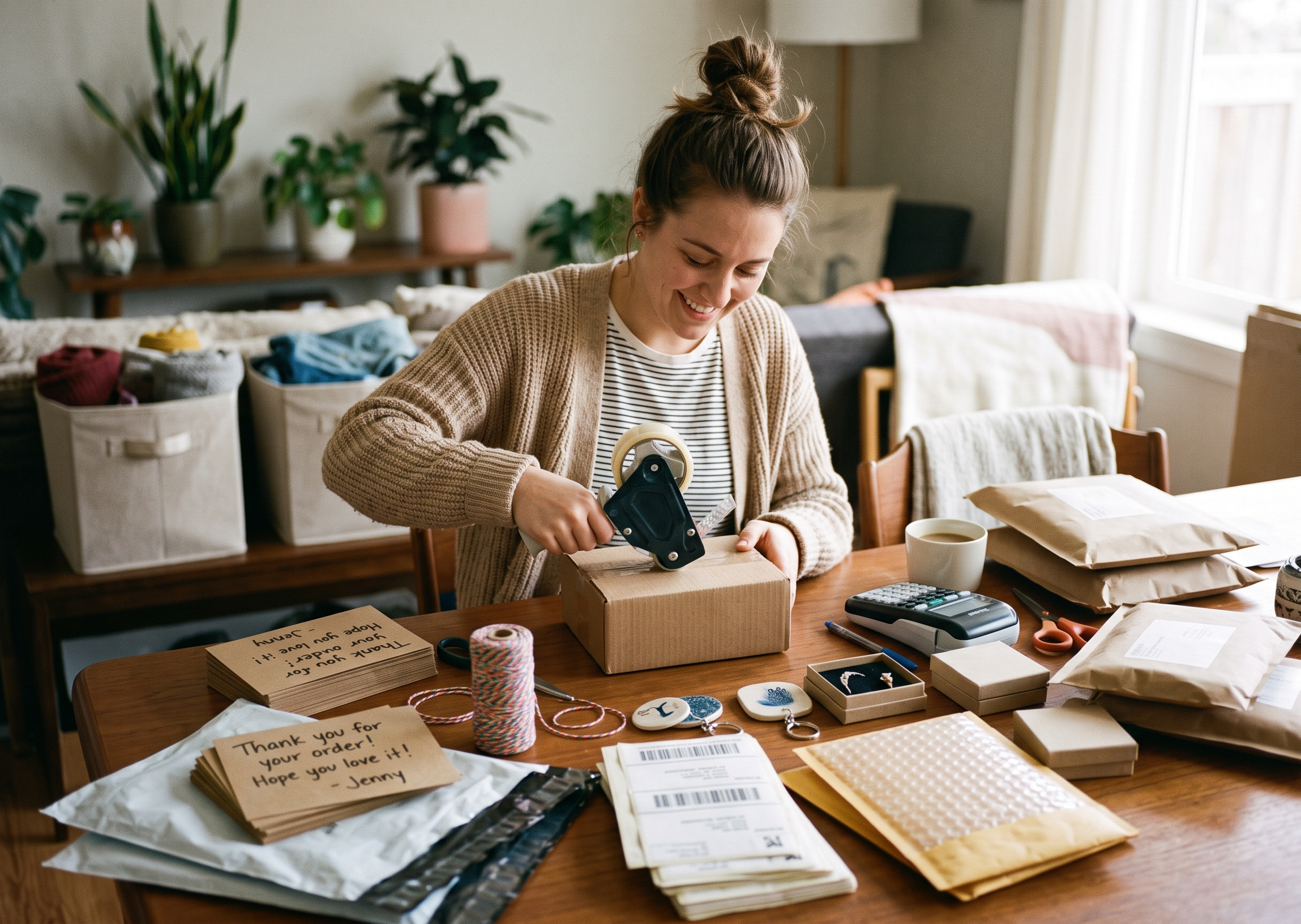
If you have been thinking about selling on Etsy but keep putting it off because it all feels a bit complicated, this article is for you. The truth is, opening an Etsy shop in the UK is far simpler than most people expect, and you do not need to have everything figured out before you begin. What you do need is a clear picture of how the fees work, what makes a listing actually sell, and where to focus your energy so you are not throwing money at things that do not matter yet.
Key Takeaways
- You can open an Etsy shop in the UK in a single afternoon, get your first listing live quickly, and polish everything else later.
- Knowing exactly how Etsy fees work, from the listing fee to transaction fees to Etsy Payments processing, is what protects your profit and stops you losing money.
- Good Etsy SEO, clear photos and great customer service matter far more for early sales than fancy branding or paid Etsy Ads on day one.
How Selling On Etsy Actually Works In 2026
Etsy is a global marketplace built around handmade items, vintage goods, craft supplies and digital downloads. It is not like Amazon or a general high street shop. Buyers come to Etsy specifically looking for something a bit different, whether that is a personalised gift, a one off piece of jewellery, or art prints for their living room. UK buyers in particular search for gifts, home décor, stationery and personalised wedding bits, which makes it a solid market if you make or source those kinds of things.
An Etsy shop is basically your own little storefront inside the Etsy marketplace. It is tied to your Etsy account and includes your shop name, profile, shop policies, payment settings and all of your product listings. Everything a buyer sees, your photos, descriptions, prices, lives inside those listings.
Before you start selling, you will need a few basics:
- A working email address
- A UK bank account for Etsy Payments
- At least one product idea (handmade, digital or vintage)
- A few decent photos of that product
- Your personal details including address
You can absolutely start this as a side hustle. Many Etsy sellers do. But UK tax rules apply from your first pound of profit, so keep basic records from the beginning even if you are not earning much yet. This blog post is written from a UK consumer angle, so examples and prices are in GBP, but the core principles apply wherever you are.
What You Are Allowed To Sell On Etsy (And What Will Get You Shut Down)
Etsy is not eBay. The rules about what you can list are stricter, and if you break them your shop can be suspended without much warning. Etsy allows selling handmade, vintage, or craft supplies, and that is pretty much it.
Here is what fits within the rules:
- Handmade goods you make or design yourself
- Digital downloads like printable planners or art prints
- Vintage items that are over 20 years old (so 2006 and earlier now)
- Craft supplies like yarn, beads, embroidery thread or party supplies
All products must be made, designed, or sourced by the seller. UK friendly examples include handmade soy candles, personalised wedding invitation prints, 1990s vintage jackets, bundles of embroidery floss, hair accessories you design, and planner pintables.
Common rule breaks that get shops shut down include reselling cheap jewellery from AliExpress and calling it “handmade”, using copyrighted characters like Disney without a licence, and mislabelling brand new mass produced items as “vintage”. Check Etsy’s prohibited items list before creating your first listing.
Planning Your Niche And First Product
The biggest mistake new sellers make is spending months trying to find the perfect idea. Picking something and starting is better than waiting forever. You can always adjust later.
A niche is simply a specific product for a specific type of buyer. Think of it as “I sell X for Y who want Z.” For example:
- “I sell minimalist wall art for renters who want a cosy flat without drilling holes”
- “I sell personalised silver necklaces for people looking for meaningful gifts”
- “I sell digital budget planners for mums who want to get on top of their finances”
- “I sell handmade soy candles for people who like local craft and natural scents”
To research your niche, type your idea into Etsy search and scan the first page. Look at price ranges, photo styles, colours and which listings carry “Bestseller” tags. This tells you what is already working and where you might find a gap.
Pick one main product type for your first listing. Impeccable craftsmanship matters on Etsy, so it is better to do one thing well than try to launch ten different products at once.

Step By Step: Opening Your Etsy Shop And Account
You can open an Etsy shop in under an hour from a laptop. It is not complicated.
- Go to Etsy.com and click “Sign in”, then “Register” to create an Etsy account with your email and password. If you are an existing Etsy member who has bought things before, you can use that same account.
- Click “Sell on Etsy” to start a new shop. Etsy will ask you to set your shop preferences including your shop language, shop country (choose United Kingdom) and shop currency (GBP).
- Choose your shop name. It must be 4 to 20 characters, no spaces or special characters, completely unique, and not obviously infringing on someone else’s trademark. Keep it simple and relevant to what you sell.
- Etsy may ask you to verify your identity as part of its new shop onboarding process. This might mean uploading a passport or driving licence photo plus a selfie. Verification usually runs in the background and should not hold you up for long.
Your shop location, shop banner and shop sections can all be set up or changed later through your shop manager. Do not let these slow you down.
Setting Up Payments, Billing And Your Etsy Bill
This is the money plumbing, how Etsy pays you and how you pay Etsy.
Etsy Payments is Etsy’s own system that collects money from buyers. Customers pay using credit or debit card, PayPal, Apple Pay, or even Etsy gift cards. Etsy then sends your earnings to your bank account after deducting fees. It is how all UK Etsy sellers manage payments.
To set up your payment and billing details, you will need to provide:
- Your full name, address and date of birth
- UK bank account details (sort code and account number)
- A credit or debit card on file to cover fees and any one time shop setup fee that may apply when opening your shop
Your Etsy bill is a running statement of everything Etsy charges you, including listing fees, transaction charges, Etsy Ads spend and offsite ads fees. Etsy deducts these from your payment account balance each month. Check your Etsy bill at least monthly. Unpaid fees can block payouts or stop you adding new listings.
Understanding Etsy Fees So You Do Not Work For Free
Fees are not the enemy, but you absolutely must know them before you set prices. Otherwise you will end up working for free.
Here is what Etsy charges UK sellers as of 2026:
- Listing fee: Etsy charges a £0.15 listing fee per item (technically $0.20 USD, converted to GBP). Listings expire after four months or when sold, and renewals cost the same again.
- Transaction fee: Etsy charges a 6.5% transaction fee on the total sale amount, which includes item price, shipping and gift wrapping.
- Payment processing fees: 4% plus £0.20 per order, charged through Etsy Payments.
- Regulatory operating fee: 0.48% of the order total as of 22 June 2026, up from 0.32% previously.
- VAT on fees: Etsy’s own fees are subject to 20% UK VAT, which is an extra cost unless you are VAT registered and can reclaim it.
Worked example: You sell a cushion cover for £20 plus £3 postage (£23 total).
| Fee type | Calculation | Amount |
|---|---|---|
| Listing fee | Fixed | £0.15 |
| Transaction fee | 6.5% of £23 | £1.50 |
| Payment processing | 4% of £23 + £0.20 | £1.12 |
| Regulatory fee | 0.48% of £23 | £0.11 |
| Total Etsy fees | £2.88 |
That is before materials, packaging and postage costs. On low value items, the fixed parts of these fees bite harder, so think carefully before pricing things at £5 or less.
Offsite ads fees are extra. If Etsy promotes your listing on Google or social media and a sale results, you pay an additional 12% or 15% based on your sales volume. This only applies when a sale is directly linked to that advert.
Pricing Your Products Properly From Day One
Most new Etsy sellers undercharge because they copy the cheapest listings they see in search. That is a fast track to losing money.
Use this simple formula: materials + packaging + your time + overheads + Etsy fees + profit margin = your price.
Overheads include things people forget: printer ink, thread, studio space, Royal Mail postage runs, packaging bought in bulk, and any tools or software you use.
Example: a handmade soy candle
| Cost | Amount |
|---|---|
| Wax, wick, fragrance oil | £2.50 |
| Glass jar | £1.20 |
| Label, packaging, tissue paper | £0.80 |
| Your time (30 mins at £12/hr) | £6.00 |
| Etsy fees (approx on £16 sale) | £2.00 |
| Postage | £3.50 |
| Total cost | £16.00 |
If you sell that candle for £16, you make nothing. Price it at £22 including postage and you have a small but real profit. Do not fear higher prices if your quality, photos and descriptions are strong. Buyers come to Etsy for something special, not “the cheapest thing on the internet.”
Creating And Optimising Your First Listing
Your first listing will probably be your worst one. That is completely fine. It is more important to get it live than to make it perfect. You can update every part of a listing later.
The listing process asks you for: a title, photos, price in GBP, description, stock quantity, tags, category, postage cost and processing time. Clear product descriptions build trust with buyers, so write in plain English what the item is, what it is made from, how big it is (Etsy listings should include dimensions in centimetres), and who it is for.
Here is where Etsy SEO basics come in. Optimizing titles, tags, and descriptions can improve search visibility on Etsy. Use keywords in your listings for better visibility. Etsy recommends using all available tags for each listing to enhance discoverability, so fill in all 13 tags with real phrases people might type, like “gift for bridesmaid” or “silver moon necklace”, not just single words like “necklace.”
Mini checklist for your first listing:
- One clear, bright main photo
- At least three extra photos from different angles
- A description covering size, materials, care instructions and who it is for
- All 13 tags filled with search phrases
- Realistic processing time and postage cost
Photos, Videos And Shop Branding That Actually Help You Sell
Buyers cannot touch your products, so your photos are doing all the selling. High quality photography is critical for attracting buyers on Etsy, and research suggests high quality product photos increase sales by 30%.
You do not need an expensive camera. A normal smartphone works well if you follow a few rules:
- Shoot in natural daylight near a window
- Use a plain, light background
- Clean your lens before every session
- Skip the heavy filters
Use multiple angles in photos to showcase product details. Aim for these shot types: a clear front image, a detail close up, a scale shot next to something familiar like a mug or coin, and a simple lifestyle image showing the product in a real home setting. Avoid dark photos, as they make products look unappealing and untrustworthy.
Adding a short video showing the item being held or used is especially helpful for clothing, jewellery and home décor.
For your shop’s appearance, keep it simple. A clean shop banner, a small icon photo, and two or three consistent background colours across your listings is enough. Creating a cohesive brand identity helps to attract customers, but you do not need to spend money on a graphic designer to get started.

Shop Policies, Postage And Packaging That Keep Customers Happy
Clear shop policies regarding shipping and returns are essential for building buyer trust. Good policies reduce disputes, refund requests and bad reviews. Write them in friendly, plain English.
Cover these areas: processing times (sellers must provide an accurate processing time for orders on Etsy), returns and exchanges, cancellations, and any rules around custom orders. Be honest about timescales.
For UK postage, check Royal Mail size and weight bands on the Royal Mail website. Decide whether to offer free shipping by folding postage costs into your item price, or to charge shipping separately. Many sellers offer free delivery to reduce cart abandonment rates, which can help with Etsy search rankings too, but make sure shipping costs are covered somewhere in your pricing.
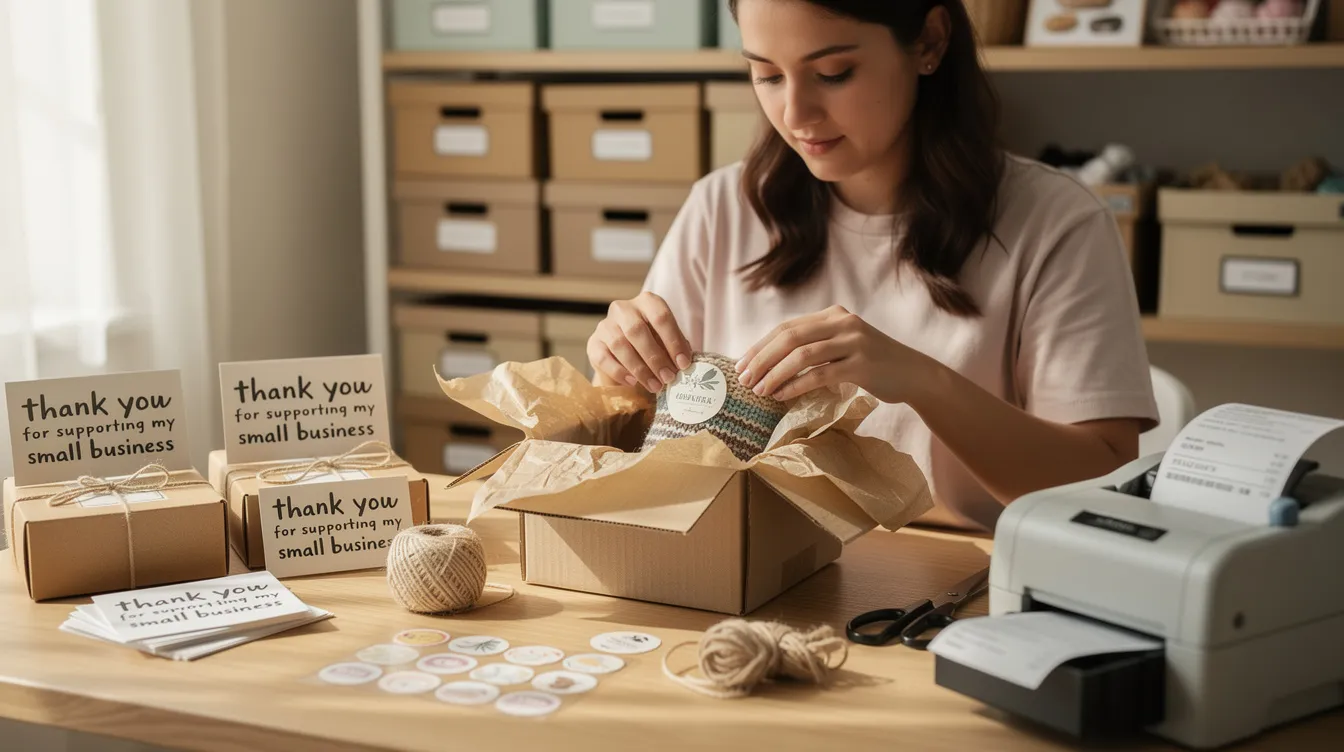
You can print shipping labels directly through Etsy or take parcels to the post office. Simple packaging goes a long way: tissue paper, a small thank you note, a business card with your Etsy store link, and sturdy boxes for anything breakable. Encourage buyers to photograph damaged parcels and contact you quickly so you can sort things out and protect your shop reputation.
Day To Day Running: Messages, Reviews And Great Customer Service
Being responsive and kind is one of the best free marketing tools you have. Excellent customer service turns one time buyers into new customers who come back and leave reviews.
Use the Etsy app to reply to messages quickly, even if you only check once or twice a day around a day job. Engage with customers to build loyalty and encourage reviews. Clear communication makes a real difference. Confirm personalised details before you start making, update buyers if there is a delay, and send a dispatch note with realistic delivery expectations.
Reviews matter. Five star ratings help your shop’s performance in search results, and most buyers check reviews before ordering. After a sale arrives, you can send a friendly message thanking the buyer and gently mentioning that a review would mean a lot. Do not be pushy.
If something goes wrong, stay calm. Apologise, offer to fix it (a replacement, partial refund, or re send), and respond quickly. A polite, professional reply to a complaint can sometimes turn a bad experience into a five star review.
Getting Found: Etsy SEO, Etsy Ads And Simple Promotion
Etsy SEO is your long term visibility engine. It is how buyers find your products when they search. Etsy Ads and social media are optional extras that sit on top.
For Etsy SEO, match buyer search terms in your titles, tags and descriptions. Use all 13 tags to improve search relevance with multi word phrases real people would type. Check your shop stats regularly through shop manager to see which keywords bring views, and refresh stale listings that are not getting traction.
Etsy Ads can help a good listing get more views, but they cannot fix poor photos, unclear descriptions or products nobody wants. As a new seller, avoid spending heavily on ads right away. Wait until a listing has some organic views, then test a small daily budget of £1 to £2 on your best performing items. Stop any advert that eats your business money without bringing real orders.
Offsite ads work differently. Etsy may show your items on Google or social platforms, and you only pay when a sale is directly linked to that click. You cannot opt out of offsite ads unless your annual revenue is below a certain level.
Simple promotion ideas that cost nothing:
- Post making of videos on TikTok or Instagram. Using social media platforms like Instagram and Pinterest can drive traffic to Etsy shops.
- Include your Etsy shop link on packaging and business cards
- If you have your own website, write a short post linking back to your listings
Legal Bits, Tax And When To Treat Your Shop As A Business
This is not legal advice, but you need to be aware of the basics. Running an Etsy business in the UK comes with responsibilities even if you are treating it as a hobby at first.
The UK has a “trading allowance” of £1,000 per tax year. If your gross self employment income is under that, you do not need to declare it. Once you go over, you must register for Self Assessment with HMRC and file a tax return. Etsy does not handle this for you.
Sellers must register for VAT if turnover exceeds £90,000 in any 12 month period. Most small Etsy shops will be well below this for a long time, but keep it on your radar as you grow. You do not need to set up an incorporated business to start, but you can choose to later.
Keep simple records from day one: a spreadsheet logging every sale, every Etsy bill, postage receipts and supply invoices. Once sales become steady, it is worth speaking to an accountant about claiming legitimate expenses and choosing the right business structure.
Growing Your Etsy Shop Without Burning Out
It can take weeks or months to get your first sale on Etsy. That is completely normal and does not mean your products are bad. Slow starts happen to most other sellers too.
Once the basics are working, focus on practical next steps: adding new listings in the same niche, improving older listings with better photos and keywords, and testing small tweaks rather than constant big changes. Look at your shop stats monthly. Which listings get views and favourites? Build around those themes.
The Etsy community offers learning options, including Etsy Teams, forums and independent Facebook groups for UK Etsy sellers. The seller handbook on Etsy is also useful. Treat all advice with a pinch of salt, though. What works for one shop may not work for yours.
You do not need a perfect plan to start a successful Etsy shop. You need one product, a few decent photos, and the willingness to list it and keep learning. Contact Etsy support if you hit a problem, tweak what is not working, and give yourself credit for getting started. That first step is the hardest one.

Frequently Asked Questions
Do I need to register as a business before I open an Etsy shop?
Etsy does not ask for a UK business registration number to open a shop, so you can start selling as an individual. You do not need to be an incorporated business. However, you must still follow UK tax rules, and you will usually need to tell HMRC about your Etsy income once it goes over £1,000 in a tax year, even if you keep your day job. If you are unsure, speak to HMRC or a qualified accountant, as rules can change.
How long does it usually take to get a first sale on Etsy?
Some sellers see a sale in the first week, but many take a month or more while Etsy tests their listings in search. Popular categories include handmade jewellery and personalized gifts, which tend to sell faster because demand is high. Strong photos, realistic pricing and active promotion on at least one social platform all speed things up. If you have views but no sales after 30 to 60 days, review your photos, titles, tags and prices before giving up.
Is it worth paying for Etsy Ads as a new seller?
Etsy Ads can help a good listing reach more people, but they cannot rescue poor photos, unclear descriptions or products nobody wants. Wait until a listing has some organic views and a decent conversion rate before testing a small daily budget of £1 to £2 for a week. Compare your profit after ad costs, not just sales numbers. Switch off any advert that eats money without bringing in real orders.
What happens if Etsy suspends or reviews my shop?
Etsy sometimes places accounts under review or temporary suspension if they spot unusual activity, policy problems or identity issues. Check your Etsy inbox and email for a message explaining what is wrong and what documents or changes are needed. Reply politely and promptly, and follow the instructions carefully. Do not open multiple new Etsy shops as a workaround, as this tends to make matters worse. If you are stuck, you can contact Etsy support directly through the help centre.
