
Free Furniture: Where To Find It, How To Get It, And What To Watch Out For

Finding free furniture can be a game-changer for students, families, and anyone on a tight budget. Whether you’re setting up a new home, replacing worn-out items, or simply looking to reduce waste, there are numerous ways to access quality furniture without spending a penny.
From online platforms and local charities to council welfare schemes, this guide covers where to find free furniture, how to secure it safely and quickly, and what to watch out for to ensure you get the best value and safety.
Key Takeaways
- Learn where and how to find free furniture quickly and reliably through online platforms, local charities, and council welfare schemes.
- Understand how to safely check and secure free or second-hand furniture, including fire safety and condition checks.
- Discover best practices for giving away your own furniture and tips to avoid scams and ensure safe collections.
Where To Find Free Furniture Online
Most people in England and Wales now find free furniture through online platforms. Here are the main ones worth checking regularly, because free items on peer-to-peer platforms go quickly so you need to check listings frequently.
- Facebook Marketplace allows users to search for free items by using price filters. Set the price to £0, filter by distance (5 to 10 miles), and search for sofas, beds, or dining tables. Also join local groups like “Free Stuff London” or “Free in Manchester” and turn on notifications.
- Freegle is an online network for giving away unwanted items for free. Join your local group (for example Freegle Bristol), respond quickly to “Offered” posts, and write clear “Wanted” posts describing exactly what you need.
- The Freecycle Network is a grassroots movement for giving and getting items for free. It works similarly to Freegle but has its own separate local groups.
- Trash Nothing aggregates freebie listings from local reuse networks. Last year, UK users gave away over 618,000 items through the platform, with high volumes in Oxford, Reading, London and Leeds.
- Nextdoor is a social network where neighbours post items they want to give away. It is particularly useful for finding furniture from people just streets away.
- Gumtree’s “Freebies” section and Preloved often have free wardrobes, TV units, and second hand furniture from landlords clearing properties after tenant move-outs.
- University and student groups are gold in August to October. Outgoing students in cities like Nottingham, Sheffield and Glasgow regularly give away desks, bookcases and mattresses.
When looking at any listing, check for clear photos, honest descriptions of damage, whether the home is pet-free or smoke-free, and access details like lifts versus stairs.

Offline Sources: Charities, Councils And Community Schemes
Not all free furniture is found online. A huge amount comes through local organisations, reuse projects, and council-linked schemes.
- Furniture reuse charities like Emmaus communities and British Heart Foundation Furniture and Electrical stores accept donations, clean and repair items, and then distribute them. British Heart Foundation sometimes runs voucher schemes for free essentials, and charities collect furniture free of charge in Tyne and Wear and other areas.
- Foundations in regions like Tyne and Wear and Greater Manchester provide low-cost second hand furniture to people referred by social workers, housing associations, or advice agencies. In 2024, Reuse Network member charities saved households roughly £321 million by supplying reused furniture and electricals.
- Local authority welfare assistance schemes (often called Local Welfare Provision, Household Support Fund, or Crisis Support) provide essential items to residents in crisis. These can include vouchers or direct referrals for beds, cookers and basic furniture.
- Community furniture banks and reuse warehouses let people on benefits or very low incomes choose free or symbolic-cost items. Many local councils maintain lists of reuse schemes for households in need, so it is worth calling your council or checking their website.
Always check charity websites for current criteria in 2025 and 2026. You may need proof of income, residency, or a referral letter. Phone ahead before visiting any warehouse.
Choosing And Checking Second Hand Furniture Safely
Free and second hand furniture can be high quality, but it needs careful checking. Here is what to look for by item type.
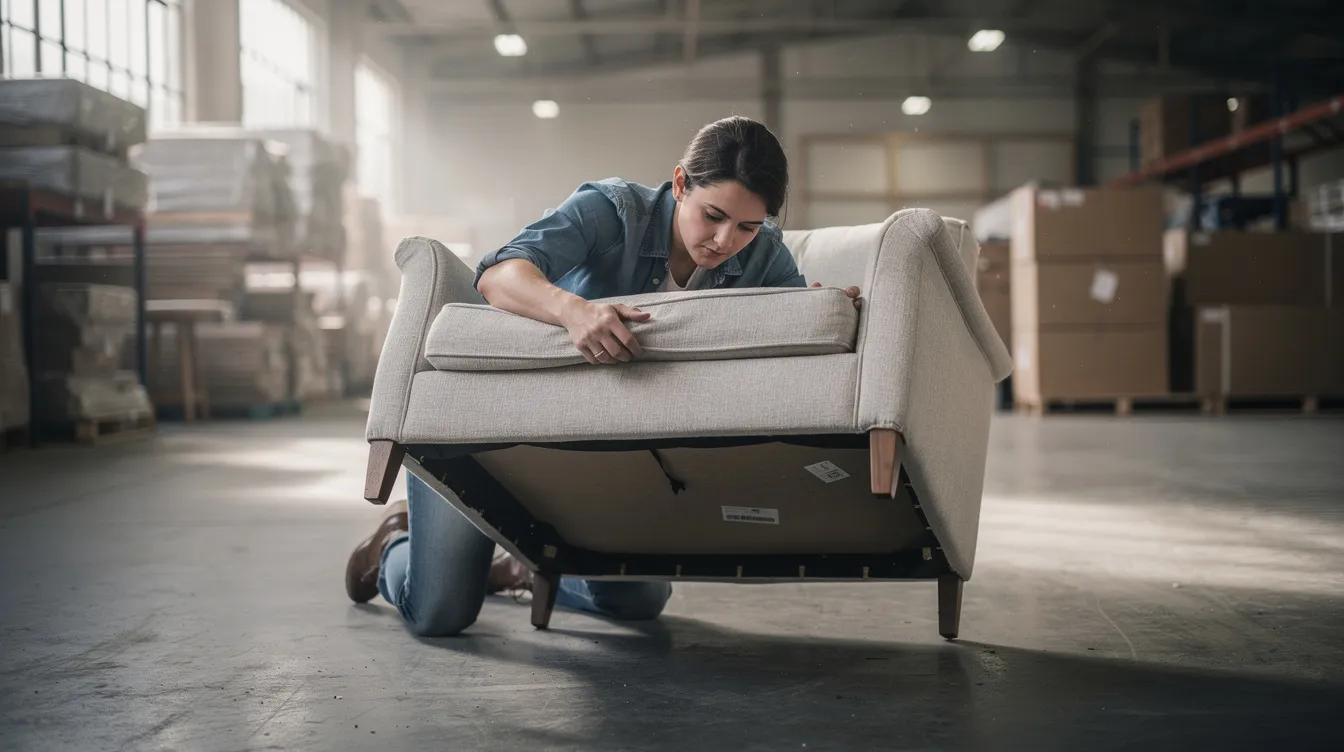
- Sofas and armchairs: Inspect upholstered furniture for fire safety labels to ensure compliance with UK regulations. Look for labels referencing BS 7177 or BS 5852. Check the frame is sturdy with no exposed springs, and avoid anything with a strong smell of smoke or damp.
- Mattresses: Avoid visibly stained, sagging, or heavily worn mattresses. Check seams for signs of bedbugs (small black spots, shed skins). Use a new mattress protector regardless. Prefer mattresses from charities that inspect their stock.
- Wooden furniture: Check wardrobes, drawers and tables for woodworm holes, major cracks, wobbling legs, and missing screws or brackets.
- Electrical furniture: Powered recliner sofas, electric beds, and lamps should have good-condition cables. Look for a recent PAT test sticker if buying from a charity shop.
- Measuring and access: Measure doorways, stairwells and the item itself. Know whether it can be dismantled and how many people you will need to carry it.
How To Secure Free Furniture Quickly And Politely
In busy UK cities, good free furniture in neutral colours can be claimed within minutes. Speed and politeness both matter.
- Write clear messages: Be brief and specific. Something like “I can collect the grey IKEA Kallax unit from LS6 this evening after 6pm” works far better than “Is this still available?”
- Have transport ready: Line up a car, van-sharing with friends, or a local man-and-van service for same-day collection. Some reuse charities offer low-cost delivery, often around £10 to £25 within a set radius.
- Confirm details: Check the exact address, floor level, lift access, whether dismantling is needed, and parking restrictions before you set off.
- Show up on time. If you are delayed, let the giver know. Send a quick thank-you message afterwards.
- Stay safe: Meet in daylight where possible, let someone know where you are going, and avoid sharing unnecessary personal information. Be cautious of any listing that asks for upfront payment to “hold” a free item.
Giving Away Your Own Furniture For Free
Many readers will also have furniture to clear when moving or redecorating in 2025 or 2026. Before booking a council bulky-waste collection, consider reuse.
- Many charities accept second hand furniture donations in good condition, especially sofas, beds, wardrobes and fridges. Users can book collections for large furniture items from charities, often at no cost.
- Give items a light clean, take clear photos, measure dimensions, and be honest about wear and defects.
- Write accurate listings on platforms like Facebook or Freegle: “Free pine double bed frame with 2 drawers, St Albans, needs collection by Saturday 12 October 2026.”
- Set clear time limits and have a backup plan (charity collection or council pickup) if no one collects.
- Reusing a sofa or wardrobe rather than sending it to landfill cuts waste and helps local families, students or refugees furnish homes at no cost.
Frequently Asked Questions
Is it safe to take free mattresses and sofas from strangers?
It can be, but you need to be careful. Check for fire safety labels (they are a legal requirement on upholstered furniture in the UK), inspect seams and folds for bedbug signs, and avoid anything that smells of damp or smoke. Items from charities that inspect their stock are a safer bet. Always use a mattress protector and consider steam cleaning upholstery before use.
Can I get free furniture if I’m on Universal Credit or a low income?
Yes, in many cases. Local authority welfare assistance schemes and furniture reuse charities across England and Wales offer free or very low-cost furniture to people on Universal Credit, ESA, or other means-tested benefits. Contact your local council welfare team, housing officer, or a Citizens Advice office to find out what referral routes are available in your area for 2025 and 2026.
What if I don’t have a car or van to collect free furniture?
You have a few options. Hiring a man-and-van by the hour is usually affordable (often £20 to £40 for a short local trip). Some reuse charities offer low-cost delivery within a set radius, and combining several items in one delivery is cheaper than separate trips. For smaller items like chairs or side tables, public transport or a taxi can work fine.
Can I resell furniture that I picked up for free?
Legally, once you own an item you can generally resell it. But ethically, if the giver specified “not for resale,” it is worth respecting that. Use free furniture for your own home first. If you do resell later, be transparent and consider donating a portion of any profit to charity.
How do I avoid scams or unsafe situations when collecting free furniture?
Stick to daylight pickups, let someone know where you are going, and bring a friend for heavy or late-evening collections. Never share bank details or pay upfront to “reserve” a free item. If a listing feels off, report it on the platform and move on. Genuine givers just want their items gone and will not ask for money.
